Telemetry and data communication equipment for Eijkelkamp Diver monitoring networks — PRO300 for single Divers, GDT Multiple for handling several loggers through one point, PRO400 for a wide range of (3rd party) sensors, and the ROAK data viewer.
Two things: data without a visit, and data now. The first is a cost argument, the second is an operational one, and the second is usually the more valuable.
A logger downloaded quarterly gives you an excellent record of what happened three months ago. If the point of the monitoring is compliance, early warning, or checking that an intervention is working, that lag is the problem. A telemetered well tells you this week that a level is rising, a conductivity trace has shifted or a dewatering system has stopped performing — while you can still do something about it.
Working out whether it pays
The cost comparison is not telemetry against nothing, it is telemetry against the true cost of visiting. Count travel time, permits and site inductions, escorts, traffic management, and whether the visit needs one person or two. Multiply by visits per year. On remote, access-controlled or urban trafficked sites that figure is frequently large enough that telemetry recovers its cost within a season or two — and on sites where access is straightforward and you are visiting for sampling anyway, it may not be worth it at all. Both answers are legitimate.
Data without a site visit, and data promptly. A logger downloaded quarterly tells you what happened three months ago; a telemetered logger tells you today. That matters where you need to react - a consent breach, a rising plume, a dewatering system that has stopped performing - and it matters on any site where getting to the well is slow, expensive or restricted.
Usually faster than people expect on remote or access-controlled sites. Add up the real cost of a visit - travel time, permits, escorts, traffic management, two people rather than one - and multiply by the number of visits a year. On networks where that figure is significant, telemetry often recovers its cost within a season or two.
Both are Prime PRO telemetry units for remote data collection from Diver networks, with the PRO400 sitting above the PRO300 in the range. Which suits you depends on the number of loggers, the site arrangement and the communication options you need - tell us the network and we will confirm.
Handling multiple loggers through a single telemetry point rather than fitting a unit per well. On a site with a cluster of monitoring wells that is considerably more economical than individual telemetry, and there is less hardware in the field to maintain.
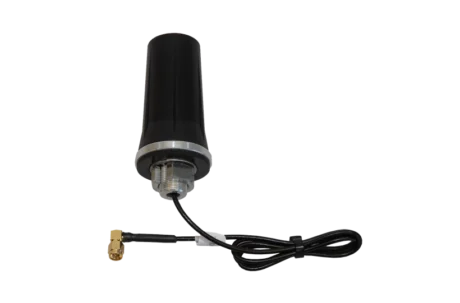
Only where signal is marginal, which on rural and low-lying sites it frequently is. An external antenna for Prime PRO, or the GPRS/UMTS/LTE antenna for GDT-S Prime, lifts the aerial clear of the chamber and improves reliability. It is worth specifying at installation rather than after a season of intermittent data - retrofitting means another visit.
A data viewer for accessing and reviewing the data your telemetry brings back, so the record can be checked without exporting and processing files first. Being able to look at the data quickly is what makes telemetry useful in practice rather than just automatic.
Often, but signal is attenuated by the cover and the surrounding ground, and cast iron covers are particularly unhelpful. Where the head is below ground, plan on an external antenna. If the site is genuinely marginal, it is worth testing signal at the exact position before committing to a network design.
Yes, and most sites should. Telemeter the wells that are critical, hardest to reach or most likely to need a rapid response, and download the rest by hand on the visits you were making anyway.
Ordering and support
All equipment here is genuine Eijkelkamp, supplied direct from our UK operation with UK-based service and support. Tell us the number of wells, how they are clustered, the access constraints and the expected signal conditions, and we will design the network with you. Request a quote or get in touch.