
Sensors and Probes
Soil and environmental sensors for continuous monitoring — HydraProbe SDI-12 soil moisture, temperature and conductivity sensors, the portable HydraGo, the Saturina soil sensor, lysimeters for water balance studies and stainless steel RBC flumes for small channel flow.
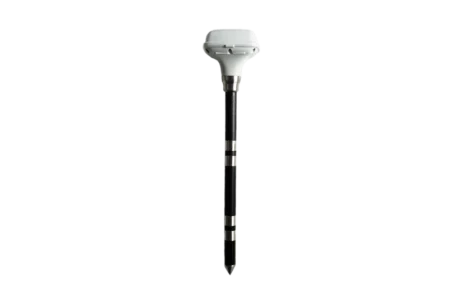
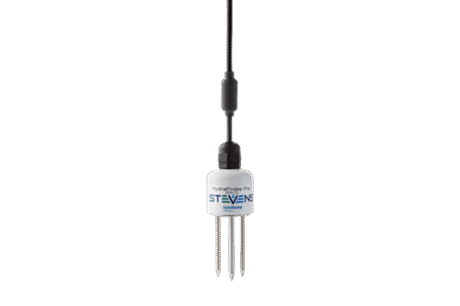


Soil sensors
- HydraProbe SDI-12 Standard — soil moisture, temperature and conductivity from one buried sensor, on the SDI-12 protocol.
- HydraProbe SDI-12 Pro — extended capability for programmes with tighter requirements.
- HydraGo — portable readings for survey and spot measurement without a permanent installation.
- Saturina Soil Sensor — an alternative soil sensor for applications its characteristics suit.
Water balance and flow
- Lysimeter — isolates a soil volume to measure drainage and evapotranspiration directly, the reference method for water balance studies.
- Stainless Steel RBC Flume — discharge measurement in small open channels from a single head reading.
Why SDI-12 makes a network practical
The appeal of SDI-12 is not the measurement, it is the wiring. Analogue sensors need a dedicated channel each, so a profile of sensors at four depths across six plots quickly becomes an unmanageable cable run and a logger with more channels than budget allows.
SDI-12 sensors share a single bus, each with its own address. That turns the same installation into one cable, one logger port and a straightforward addressing scheme, and it makes adding a sensor later a simple matter rather than a rewiring exercise. For any multi-depth or multi-point soil monitoring network, that is usually the deciding factor.
Installation decides your data quality
Nothing affects soil sensor data more than how the sensor was put in the ground — and nothing is more often rushed. A buried moisture sensor reports the water content of the soil it is in contact with. If it sits in an oversized hole with loosely backfilled material around it, that is exactly what it will faithfully measure, and the readings will track the disturbed pocket rather than the profile.
The symptoms are characteristic: readings that respond far too quickly to rainfall, that dry out faster than the surrounding soil should, or that simply never agree with a gravimetric check. None of it can be fixed in processing.
Use a purpose-made HydraProbe installation auger, which cuts a hole sized so the sensor seats into undisturbed soil at the correct depth. It is a small item that determines whether years of logged data are worth anything.
Related equipment
For one-off field measurements rather than continuous monitoring see Soil. For laboratory determination of soil physical properties see Soil Physical Research. For pore water chemistry alongside moisture see the Rhizon samplers in Liquid Samplers, and for water quality sensors Scuba Multiparameter Probes. For retrieving data remotely see Data Communication.
Sensor and probe FAQs
Ordering and support
All sensors here are genuine Eijkelkamp, supplied direct from our UK operation with UK-based service and support. Tell us the depths, the number of points, the logger you intend to use and whether telemetry is required, and we will specify the network. Request a quote or get in touch.