
General Lab Equipment
General laboratory equipment for soil and water work — electronic balances from pocket size to 12,000 g capacity for field and bench weighing, and soil stirrers for preparing consistent, properly dispersed suspensions.

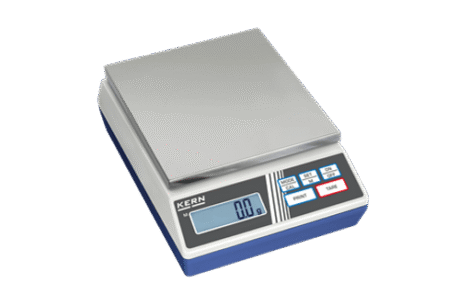
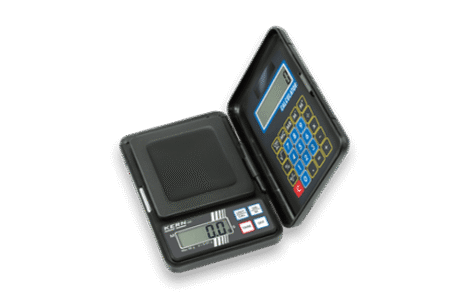

Balances
- Electronic Pocket Balance — for the field kit, where portability matters more than capacity or resolution.
- Electronic Balance 2000 g / 4000 g — the general purpose bench balance covering most routine soil work.
- Electronic Balance 12,000 g — for bulk samples and larger vessels.
Sample preparation
- Soil Stirrer — consistent dispersion of soil suspensions for particle size analysis and for pH and EC measurement in suspension.
Choosing a capacity
The usual mistake is buying to the sample weight rather than the total weight. Sampling rings, tared dishes, bags and beakers all count, and a balance operating near the top of its range is both less accurate and shorter lived than one with headroom. Add up the heaviest realistic combination you will place on the pan, then choose the range above it.
Resolution matters as much as capacity, and the two trade against each other. A high capacity balance necessarily reads in coarser increments, so if your work involves small samples and small differences, a second lower-capacity balance is more useful than one instrument trying to cover everything.
Weighing in the field
Gravimetric moisture content is a difference between a wet weight and a dry weight, which means any water lost between collection and weighing shows up directly as an error in the result. Samples in bags lose moisture, and warm vehicles accelerate it.
Weighing at the point of collection removes that source of error entirely, which is what a pocket balance in the field kit is for. It will not match a bench balance for resolution, and for reported determinations you should still weigh properly — but for capturing an accurate wet weight before transport, it solves a problem no laboratory instrument can.
Why dispersion matters more than it looks
Stirring appears to be the least important step in a soil analysis, and it quietly determines the result. An aggregate that has not been dispersed behaves like a single large particle: in particle size analysis it shifts the distribution towards the coarse end, so a clay reports as a silt. In pH and EC measurement, incomplete dispersion means the solution has never equilibrated with the whole sample.
Neither error announces itself. The numbers look entirely normal and are simply wrong, which is why consistent mechanical stirring rather than hand stirring is worth the modest cost — particularly where more than one person prepares samples.
Related equipment
For soil physics apparatus see Soil Physical Research, which is where most of the samples weighed here end up. For field measurement see Soil and Water, and for recovering the samples themselves Soil Samplers.
Laboratory equipment FAQs
Ordering and support
All equipment here is genuine Eijkelkamp, supplied direct from our UK operation. Tell us the sample sizes and containers you work with and the determinations you run, and we will recommend the right capacity and resolution. Request a quote or get in touch.