


Conventional Foundation Rigs
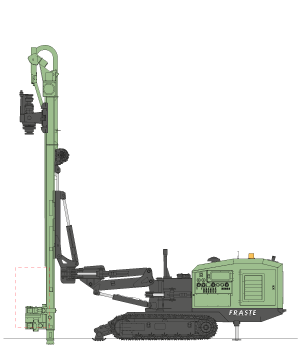
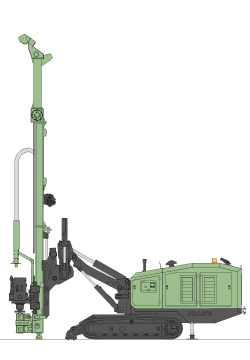
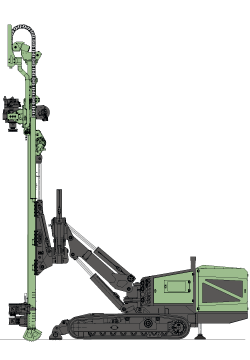
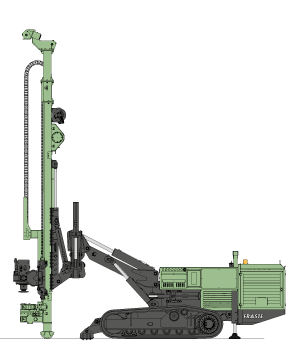
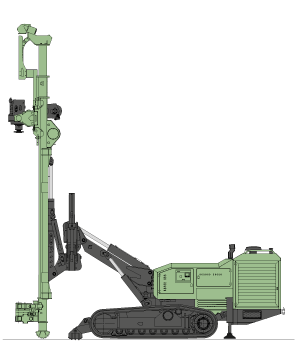
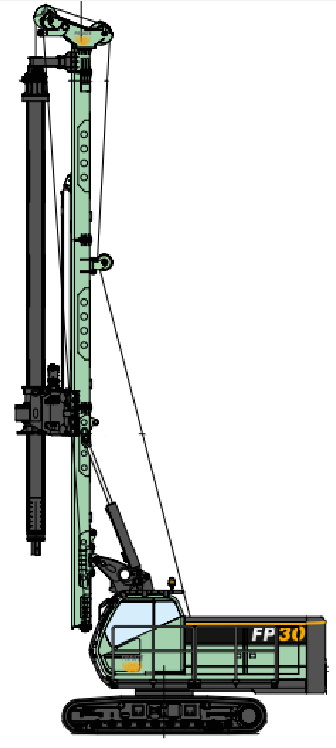
Fraste conventional foundation rigs for micropiling, anchoring, jet grouting and ground consolidation. The MITO series runs from the compact MITO 4 CS for restricted access up to the MITO 35, alongside the FP 30. Supplied, supported and serviced in the UK.



The MITO range
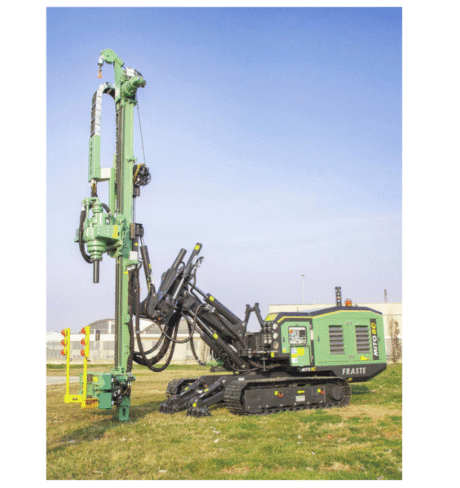
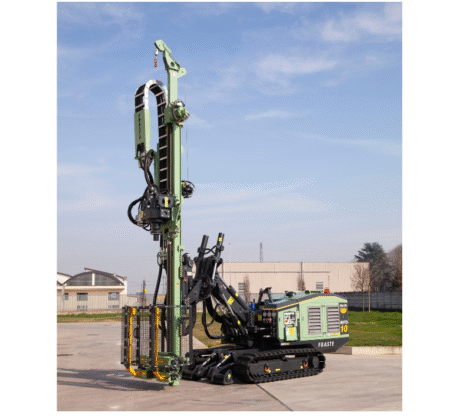
The MITO series steps through capacity while keeping the same purpose — drilling that supports or improves the ground rather than investigating it. Model choice is set by pile or anchor diameter and depth, and just as often by the space available to work in.
- MITO 4 CS — the compact end of the range, configured for restricted access, low headroom and work inside existing structures.
- MITO 8C and MITO 10 — small to mid capacity, for micropiles and anchors on constrained urban sites.
- MITO 15 and MITO 20 — the middle of the range, covering the majority of general foundation and consolidation work.
- MITO 25 and MITO 35 — higher torque and thrust for larger diameters, greater depths and heavier ground improvement programmes.
- FP 30 — a foundation rig in the same family, offered where its configuration suits the work better than a MITO of comparable capacity.
What these rigs are used for
Foundation drilling exists to make ground carry load it could not otherwise carry, or to hold a structure that would otherwise move. In practice that means micropiles beneath extensions, underpinning and new build on poor ground; ground anchors and tie-backs retaining excavations and slopes; jet grouting and injection to consolidate weak or permeable strata; and small diameter piling where a full size piling rig is disproportionate or cannot reach.
It is a different discipline from investigation drilling. Nothing is being recovered and nothing is being logged — the hole is a means to install something, and the specification follows the structural design rather than a sampling requirement.
Access is usually the constraint
More foundation jobs are decided by access than by capacity. The work tends to happen where building has already happened: inside existing structures, in basements and undercrofts, on tight urban plots, alongside live railways and roads, and next to structures that must not be disturbed. A rig with ample capacity that cannot physically reach the pile position is no use.
This is why the compact models matter disproportionately in this range. When you enquire, tell us the headroom, the gate or door width, the floor loading and how the rig has to be brought in — those numbers frequently narrow the choice before capacity is even discussed.
Specifying from the design
Pile and anchor design is your geotechnical engineer's territory, and it sets diameter, depth, inclination and installation method. Once those are known we can match a machine to them. It is worth involving us before the method is finally fixed, though: access constraints occasionally rule out an approach that looked straightforward on paper, and knowing that early is cheaper than discovering it on site.
Related ranges
For water wells, geothermal and general purpose drilling see Conventional Rotary Rigs. Where the job is site investigation rather than construction, see CPT Rigs for in-situ geotechnical parameters, Sonic Rigs for high recovery coring, and Window Sampling for shallow work with restricted access. Drilling consumables are available from our online tooling range.
Foundation rig FAQs
What work do foundation rigs do?
Ground improvement and structural support rather than extraction. That means micropiles, anchors and tie-backs, jet grouting, soil consolidation and injection work, and small diameter piling - the drilling that happens so something can be built on or beside the ground, rather than to find out what is in it.
What is the difference between the MITO models?
They step through capacity and mast configuration while sharing the same purpose. MITO 4 CS sits at the compact end for restricted access and low headroom, and the range runs up through MITO 8C, 10, 15, 20, 25 to MITO 35 as torque, thrust and reach increase. The right model is set by pile or anchor diameter, depth and the space you have to work in.
What is the FP 30 for?
The FP 30 is a foundation rig in the same family, offered where its configuration suits the work better than a MITO of comparable capacity. As with the rest of the range, the sensible approach is to describe the job and let us match the machine rather than working from model numbers.
Can these rigs work in restricted access?
That is one of the main reasons they exist. Foundation work frequently happens inside existing buildings, in basements, on tight urban plots and alongside live structures, where a full size rig simply cannot go. The compact models in the range are configured for low headroom and narrow access, which is often the deciding factor over raw capacity.
How do I choose between micropiles and other solutions?
That is a design question for your geotechnical engineer rather than an equipment one, and it depends on loads, ground conditions and what is already built nearby. Once the design is settled, we can match a rig to the pile diameter, depth and access - and it is worth having that conversation before the method is finalised, since access constraints sometimes change what is practical.
Do you supply the tooling as well as the rig?
Yes. Drilling consumables and tooling are stocked in the UK, with fast-moving items available to order directly and the wider range quoted on request.
Is rental available for foundation rigs?
We run a UK drilling rig rental fleet. Tell us the project, the dates and the specification you need and we will confirm what is available.
Specifying a rig
Foundation rigs are configured to the job and quoted rather than listed. Send us the pile or anchor schedule, the ground conditions, and the access and headroom you are working with, and we will match a machine to it. Request a quote, ask about the rental fleet, or read about UK service and support.