
Water Level Loggers
Eijkelkamp Diver water level loggers for continuous groundwater monitoring — TD, Micro, Cera and CTD Divers for level, temperature and conductivity, the Baro Diver for barometric compensation, and the suspension and anti-fouling hardware for reliable long deployments.




The Diver range
- TD Diver — the standard logger for water level and temperature, and the right default for most groundwater monitoring.
- Micro Diver — the compact unit, for narrow wells and installations where clearance is tight.
- Cera Diver — ceramic housing for aggressive, saline and chemically demanding water where a standard housing would degrade.
- CTD Diver — adds conductivity to level and temperature, for tracking salinity, saline intrusion and conductive contaminant plumes.
- Baro Diver — logs barometric pressure at the site so the atmospheric component can be removed from the others. Not optional in practice.
Why barometric compensation is not optional
A Diver measures absolute pressure — the water column above the sensor plus the weight of the atmosphere above that. Barometric pressure changes by enough over a few days to produce apparent water level swings of tens of centimetres that have nothing to do with groundwater. On a shallow well responding to rainfall, that noise can be larger than the signal you are trying to measure.
A Baro Diver deployed at the site records the atmospheric component so it can be subtracted afterwards. One typically covers several water level Divers across a site, which makes it a small addition to the cost of a monitoring network and the difference between a usable record and an unusable one.
Getting deployment right
The logger records pressure; turning that into a water level depends on knowing the depth at which the sensor hangs. If the suspension creeps downward over six months, the reference depth moves and the entire record drifts with it — and you usually only find out when the logger data stops agreeing with your manual dips.
Three habits prevent it. Use steel cable rather than rope where the deployment is long or deep, because it does not stretch. Record the deployment depth against a marked datum on the well head at installation. And take a manual dip with a water level meter at every visit, so you can verify and if necessary correct the record.
Suspension and protection
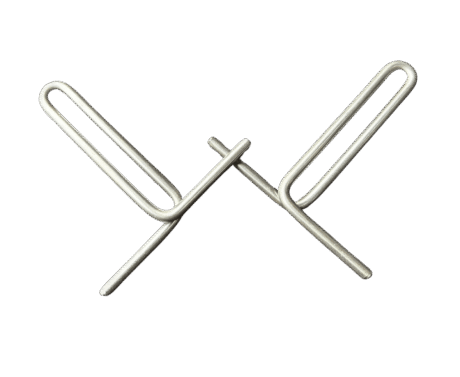
- Diver Wire Hangers — support the line at the well head so the logger hangs at a fixed depth.
- Stainless Steel Wire Clamps — secure the line. A corroded clamp is the commonest cause of a lost logger.
- HMPE Rope — light and non-corroding for shallow to moderate deployments.
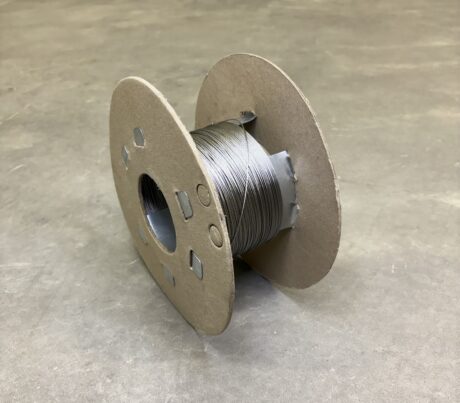
- Steel Cable — low stretch, for long deployments and deeper wells.
- Diver Copper Shield — suppresses biofouling, which otherwise degrades readings between visits in nutrient-rich water.
Setting the logging interval
Match the interval to the process rather than defaulting to the fastest setting. Tidal response, pumping drawdown and recovery, and storm response need frequent sampling. Seasonal recharge and long-term trend monitoring do not, and logging every fifteen minutes for a year produces a very large file describing something you could have seen at hourly resolution — while consuming battery and memory that would otherwise have extended the deployment.
Retrieving the data
Either download on site with a read-out unit — Diver read-out unit, Diver-Mate or the Prime PRO300 — or fit telemetry so the data returns without a site visit. On remote or hard-to-reach networks, telemetry usually pays for itself in avoided travel within a season.
Related equipment
For the wells themselves see Monitoring Wells. For manual verification readings see Water Level Meters. For water quality parameters beyond conductivity, see Scuba Multiparameter Probes. Deployment hardware is also available for immediate ordering in the shop.
Water level logger FAQs
Ordering and support
All loggers here are genuine Eijkelkamp equipment supplied direct from our UK operation, with UK-based service and support. Tell us the number of wells, the deployment length, the water chemistry and whether you need conductivity or telemetry, and we will specify the network. Request a quote or get in touch.