
Sludge Samplers
Eijkelkamp sludge and sediment samplers for rivers, canals, lakes, reservoirs and estuaries — Van Veen and Ekman grabs, Beeker and free fall corers, the Arnhem bed load transportmeter, Secchi disc for transparency and sediment level staves.



Grab samplers
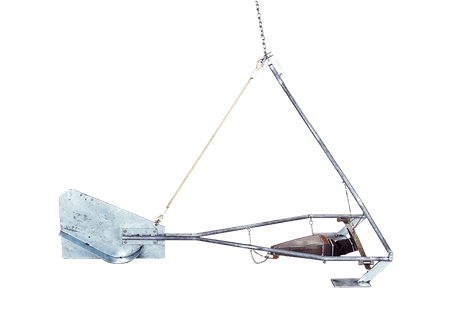
- Van Veen Grab — the heavier grab, biting through firmer beds and suited to open water.
- Ekman Grab Set — lighter and gentler, for soft fine sediment in shallow, sheltered water where minimal disturbance matters.
Corers and depth samplers
- Beeker Sediment Core Sampler — an intact core including the sediment-water interface, which a grab destroys.
- Free Fall Corer Standard Set — coring in deeper water under the corer's own momentum.
- Multisampler — Rod Operated, 5 m — rod operated sampling with positive depth control.
Transport and transparency
- Bed Load Transportmeter Type Arnhem — measures material moving along the bed, as distinct from suspended load.
- Visibility Disc according to Secchi — water transparency, simple and standardised.
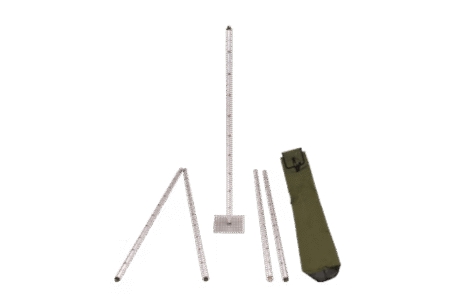
- Sediment Level Stave Standard Set — sediment accumulation levels, for tracking siltation over time.
The grab versus corer decision
This is the choice that determines whether the fieldwork answers your question, and it is worth settling before mobilising rather than on the bank.
A grab gives you bulk surface sediment, homogenised as the jaws close. For sediment chemistry, particle size distribution and benthic macroinvertebrate sampling that is exactly right, and a grab is faster, simpler and more forgiving of difficult beds.
A corer preserves the vertical sequence. If you want to know how contamination has changed over time, when a source began contributing, or what the deposition history of a reservoir looks like, the sequence is the entire dataset and a grab destroys it in the act of collection. The Beeker corer also captures the sediment-water interface, where much of the biological and chemical activity that matters actually happens.
Matching the sampler to the bed
Bed material determines whether a deployment succeeds. Soft silt and mud sample cleanly with almost anything. Firm sand, gravel, stiff clay and debris-strewn beds hold grab jaws open, and the sample either washes out on retrieval or never fills the bucket — and a partly closed grab has usually lost the fines, which is the fraction most analyses depend on.
Inspect every recovery before accepting it. On difficult beds expect several attempts, and if the grab consistently surfaces part-full, the honest conclusion is usually that the sampler is wrong for the bed rather than that the operator needs to try harder.
Related equipment
For the water column rather than the bed see Liquid Samplers and Water for field meters. For continuous water quality monitoring see Scuba Multiparameter Probes. The Van Veen grab is also available for immediate ordering in the shop.
Sludge sampler FAQs
Ordering and support
All samplers here are genuine Eijkelkamp, supplied direct from our UK operation. Tell us the water depth, the expected bed material, the platform you will deploy from and what the samples are being analysed for, and we will confirm whether a grab or a corer is right. Request a quote or get in touch.