
Soil Physical Research
Laboratory apparatus for soil physical research — complete pF determination sets including sandboxes, sand kaolin boxes, ceramic plates and membrane apparatus, shear and compression test apparatus, permeameters, wet sieving, pipette and hydrometer particle size analysis, air pycnometer and calcimeter.
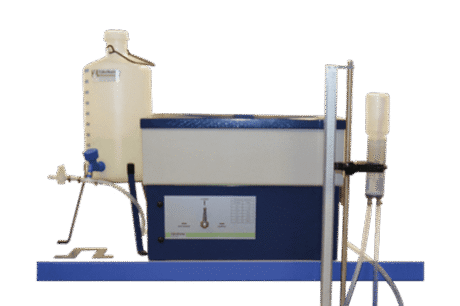
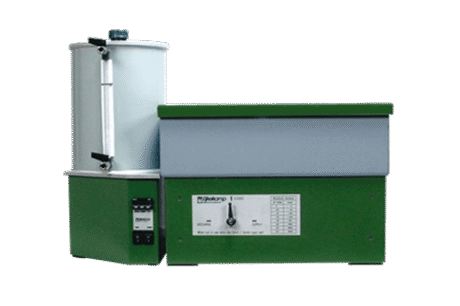
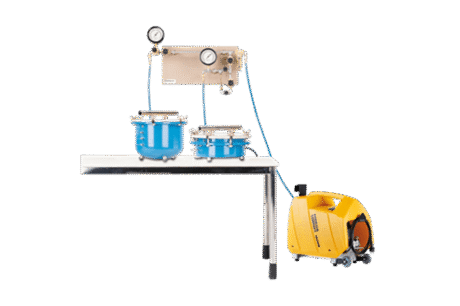
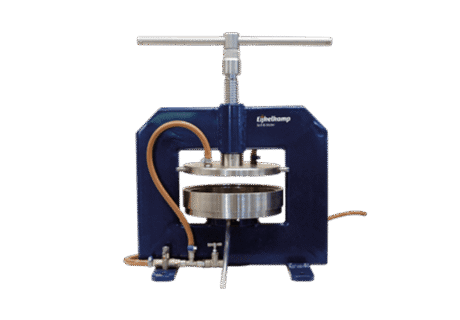
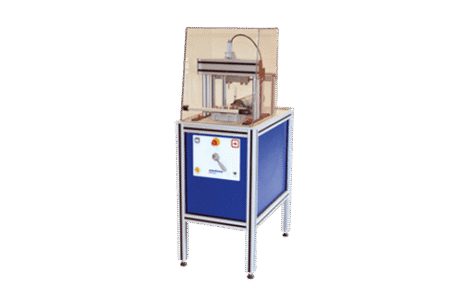
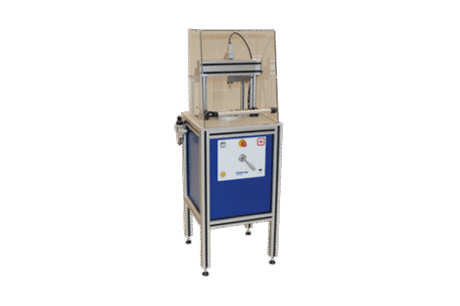
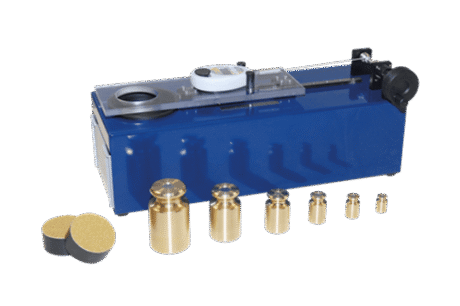
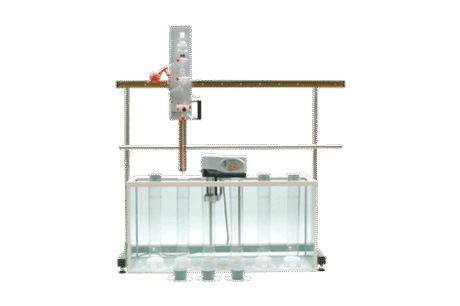
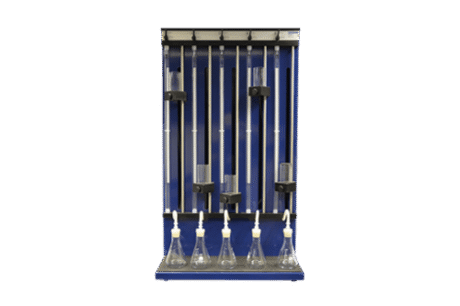
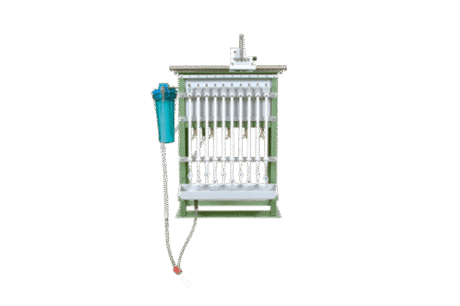
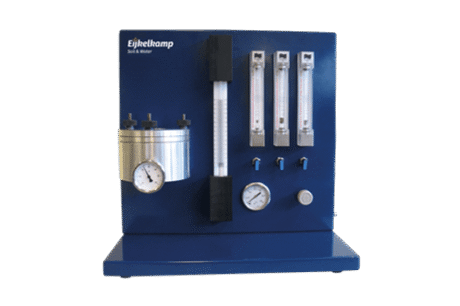
pF determination and water retention
No single instrument covers the full soil water retention curve, so the apparatus is organised by suction range.
- Complete Set for pF Determination — covers the full range in one specification.
- Sandbox for pF Determination — the wet end, near saturation.
- Sand Kaolin Box — extends the range to higher suctions.
- Membrane Apparatus — the dry end, at high suction.
- Ceramic Plates Set — consumable plates for the apparatus above.
Strength and deformation
- Surface Shear Test Apparatus — shear behaviour at the soil surface.
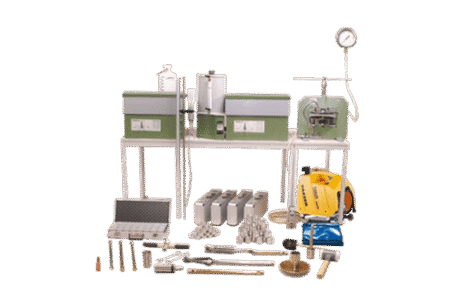
- Shear and Compression Test Apparatus — combined strength and deformation testing.
- Compression Test Apparatus Set — compression behaviour, for compaction and settlement work.
Permeability and porosity
- Soil Water Permeameters — saturated hydraulic conductivity on undisturbed ring samples.
- Air Permeameter for Soil — air permeability, a sensitive indicator of pore continuity and structural damage.
- Air Pycnometer according to Langer — particle density and pore volume by gas displacement.
Particle size and composition
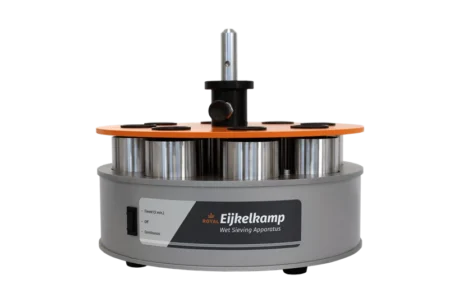
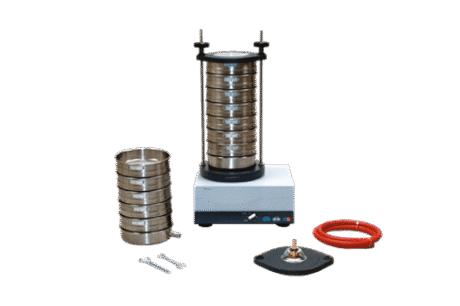
- Wet Sieving Apparatus — separates the sand fractions.
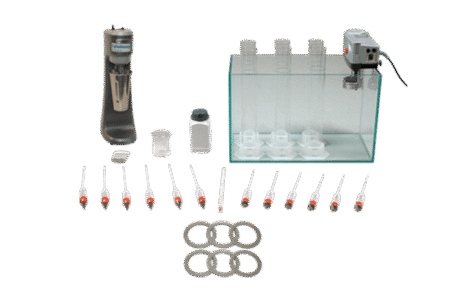
- Pipette Apparatus — the reference sedimentation method for silt and clay, and the more precise option.
- Hydrometer Kit — faster and less labour intensive sedimentation, at somewhat lower precision.
- Granular Composition Test Set — combines sieving and sedimentation for full particle size distribution.
- Calcimeter — carbonate content by measuring evolved carbon dioxide.
Why the retention curve is worth the effort
Determining pF across the full range is laborious, and it is still the most informative measurement in soil physics. The curve tells you how much water the soil holds, how much of it plants can actually extract, and how readily the rest drains — which is the input to irrigation planning, drainage design, hydrological and crop modelling, and any assessment of whether management or compaction has changed the soil.
Moisture content alone answers none of those questions, because the same water content means entirely different things in a sand and a clay. The curve is what makes the number interpretable.
The laboratory can only be as good as the sampling
Nearly all of this apparatus works on undisturbed ring samples, because every property being measured — retention, conductivity, porosity, strength — depends on structure and density being preserved between the field and the bench. A ring driven without a holder, struck directly, or transported uncapped has already lost the properties you are about to spend a week measuring.
It is worth being strict about field technique for that reason. See Soil Samplers for the correct ring kits, closed ring holders, hammering heads and protective caps.
Related equipment
For in-situ field measurement of the same properties see Soil, and for continuous sensor monitoring see Sensors and Probes. Balances and stirrers are in General Lab Equipment.
Soil physical research FAQs
Ordering and support
All apparatus here is genuine Eijkelkamp, supplied direct from our UK operation. We quote regularly for universities and research institutes, including against grant applications and tender documents. Tell us which standards you work to and the throughput you need, and we will specify accordingly. Request a quote or get in touch.