
Monitoring Wells
Eijkelkamp monitoring well components for installing, sealing and protecting groundwater monitoring boreholes — HDPE, PVC and pre-packed filter pipe, plain pipe in screw thread and clamping socket connections, bentonite plugs and pellets, sand catchers, caps, casing and well covers.


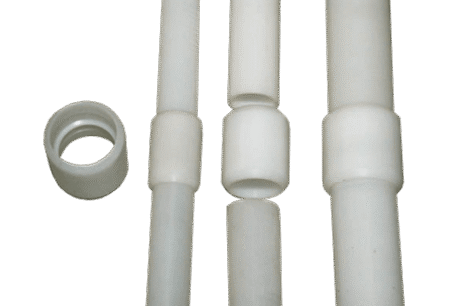




Pipe and screen
- HDPE Filter Pipe with Screw Thread Connection — slotted screen admitting groundwater across the monitored interval.
- HDPE Plain Pipe with Screw Thread Connection — solid riser from the top of the screen to ground level.
- HDPE Pipe with Clamping Socket Connection — faster to assemble, for shallower installations and multi-well programmes.
- PVC Pipe — rigid and economical for routine shallow monitoring.
- Pre-Packed Filter Pipe — filter pack already fitted around the screen, removing the hardest step in a deep or collapsing hole.
- Polypropylene Filter Gauze — additional filtration where fines would otherwise pass the screen.
- Well Pipe Adaptor 32 to 20 — joins the two common diameters.
Sealing the annulus
An unsealed annulus is a direct pathway from the surface to your screened interval, and it is the most frequent reason monitoring data turns out to describe the borehole rather than the aquifer.
- Bentonite Plugs — swell on contact with water to seal above the screen. Straightforward in a dry hole.
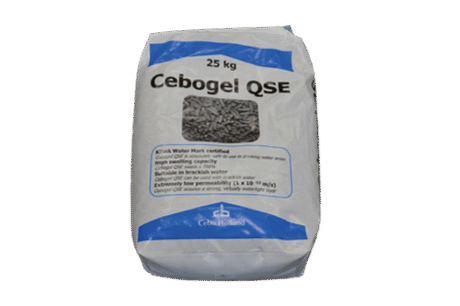
- Cebogel QSE Bentonite Pellets — sized to fall through standing water and hydrate at depth, so the seal forms where you intended rather than bridging above it.
- Pipe with Bentonite Collar — carries the seal at a fixed position on the pipe itself.
- Sand Catcher — below the screen, collecting fines before they reach your samples or a pump intake.
Caps, casing and covers
- Pointed Bottom Cap — Screwable — closes the base and eases the string into the hole.
- Top Cap — PE in sets of ten, and the Natural PE Cap for general use.
- Protective Casing — shields the well head from damage.
- Well Cover with Plastic Lid for sheltered positions and the Cover with Cast Iron Lid where the head takes traffic or impact.
- Liquid Tight Floor Cover — for heads set into trafficked surfaces that must stay sealed.
Designing the well
Everything follows from the horizon you intend to monitor. Position the screen across it and no further — the commonest design fault is screening too long an interval, which quietly mixes water from horizons you meant to keep separate and produces an average that represents nothing. Run plain pipe from the top of the screen to surface, place filter sand around the screen, and seal above it.
Decide the diameter from the equipment going down the well rather than from the pipe price. A level meter needs almost no clearance; a submersible pump needs considerably more, and a well that is too narrow to pump is a well you cannot properly sample.
Using the well once installed
See Water Level Loggers for continuous level recording and Data Read-Out Units or Data Communication for retrieving the data. Groundwater Pumps covers purging and sampling, and Liquid Samplers the bailers and discrete depth samplers. Fast-moving well components are also available for immediate ordering in the shop.
Monitoring well FAQs
Ordering and support
All components here are genuine Eijkelkamp equipment supplied direct from our UK operation, sized and threaded to work together. Send us the depth, the horizon you need to monitor and the equipment that will go down the well, and we will put together the pipe schedule and fittings list. Request a quote or get in touch.