
Scuba Multiparameter Probes
Scuba multiparameter probes for continuous water quality monitoring — temperature, conductivity, pH, dissolved oxygen and turbidity measured together in one deployed instrument. The range covers Scuba 50 to 105, the F90 and Trimeter, and the Easy Scuba models.
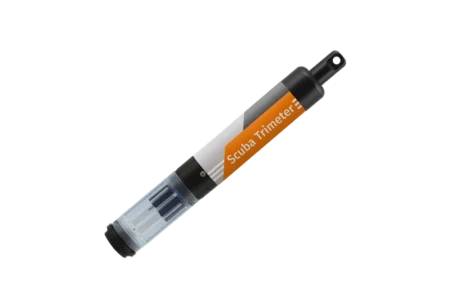


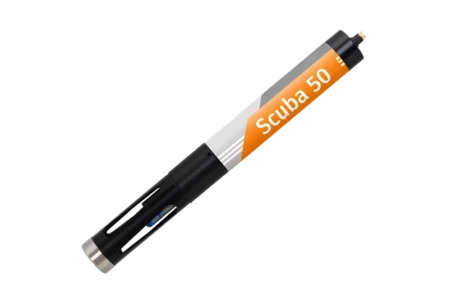
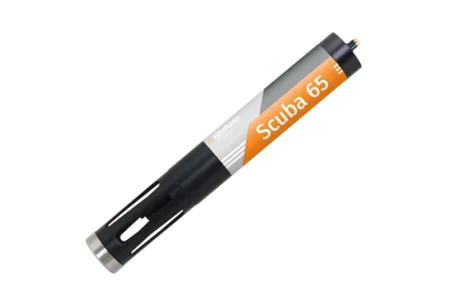
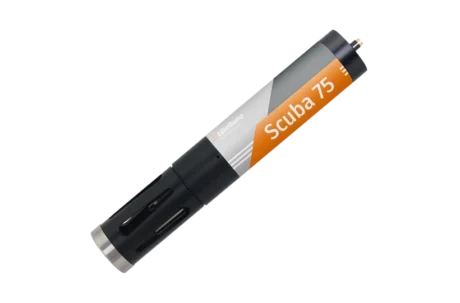
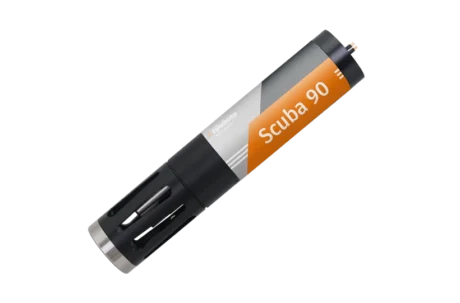

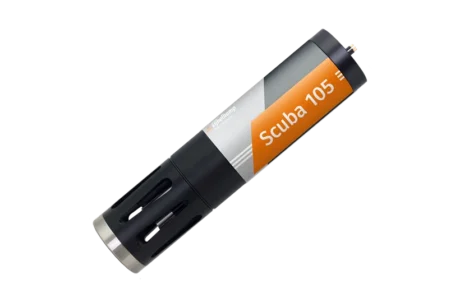
The Scuba range
- Easy Scuba 50 and Easy Scuba 75 — straightforward configurations for routine monitoring with a defined parameter set.
- Scuba 50, Scuba 65 and Scuba 75 — the core of the range for general water quality work.
- Scuba 90, Scuba F90 and Scuba 105 — wider configuration and additional parameters.
- Scuba Trimeter — focused on a defined core parameter set, often the sensible choice for routine compliance monitoring.
Why measure parameters together
Water quality parameters are not independent, and interpreting them separately loses most of the information. Dissolved oxygen has to be read against temperature to mean anything. A conductivity shift alongside a temperature change suggests something different from a conductivity shift on its own. Turbidity rising with a level rise is a storm response; turbidity rising without one is something else.
A multiparameter probe records all of it at the same point and the same instant, so those relationships are preserved. Assembling the same picture from separate instruments and separate visits is both more work and less reliable.
Continuous deployment against spot readings
A spot reading tells you the value at the moment someone was standing there, which is usually mid-morning on a working day in reasonable weather. Most of what matters in water quality happens at other times: the overnight dissolved oxygen sag, the first flush after rainfall, a discharge event, the diurnal cycle in a productive river.
If the question is whether a threshold is ever breached, or when and for how long, only a continuous record answers it. Spot sampling can confirm a condition; it cannot rule one out.
Biofouling is the practical limit
The main constraint on long deployments is not battery or memory but growth on the sensor faces. Biofouling drifts readings gradually rather than failing outright, which is what makes it dangerous — the record continues to look entirely plausible while becoming steadily wrong, and the problem is often only visible in hindsight.
Fit a copper anti-fouling kit, set a cleaning interval appropriate to the water rather than to convenience, and calibrate both before and after each deployment. That post-deployment check is what tells you how much drift occurred and whether the data needs qualifying — without it you are guessing.
Related equipment
See Scuba Accessories for cables, adaptors, the flow through cell, softcase and anti-fouling kit. For spot readings and portable field meters see Water. For groundwater level and conductivity logging see Water Level Loggers, and for remote data retrieval Data Communication.
Multiparameter probe FAQs
Ordering and support
All probes here are genuine Eijkelkamp, supplied direct from our UK operation with UK-based service and support. Tell us the parameters you need, the deployment length, the water type and whether the work is regulated, and we will confirm the right configuration. Request a quote or get in touch.