
Tooling
Drilling tooling supplied and supported in the UK — Carbotec, PDC and impregnated diamond core bits, subs and adapters, multi-purpose rods, core lifters and UT100 catchers, plus SPT equipment and dynamic probes for geotechnical testing.

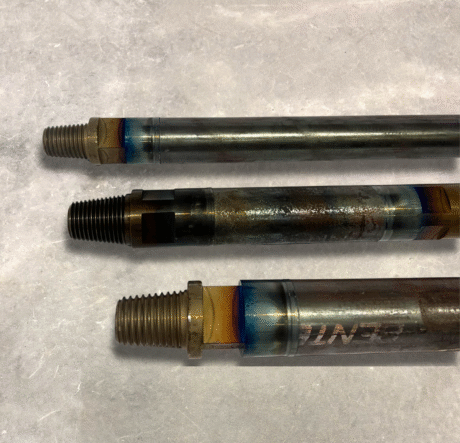

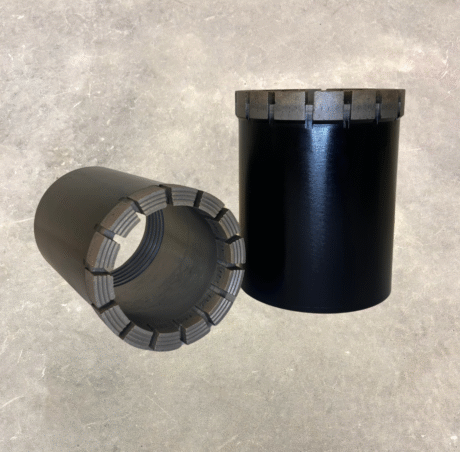

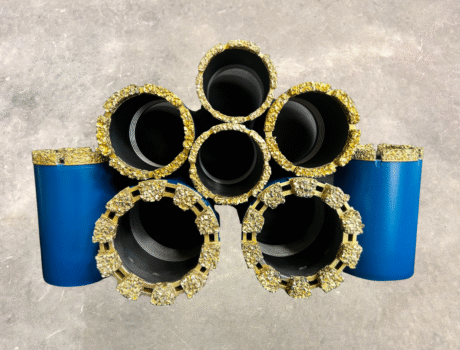

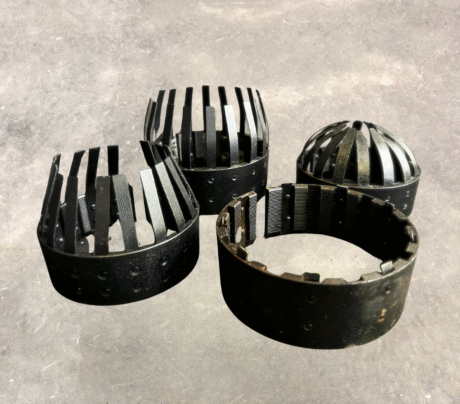

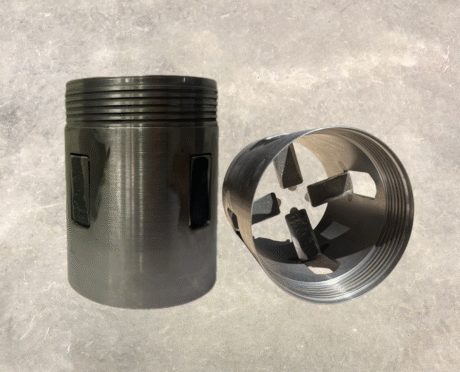
Bits and cutting tools
- Impregnated Diamond Core Bit — for hard, abrasive rock. The matrix wears back to expose fresh diamond, so the bit keeps cutting as it wears.
- PDC Core Bits — shear rather than grind, and considerably faster in soft to medium formations.
- Carbotec Bits — for rotary and core drilling work.
String components
- Multi-Purpose Rods — drill string suited to a range of applications rather than tied to one method.
- Subs and Adapters — connect components with different thread forms and sizes, which is what keeps mixed-generation tooling usable.
- Core Lifter and UT100 Catcher — grip the core so it breaks cleanly and stays in the barrel on the way up.
Geotechnical testing equipment
- SPT Equipment — Standard Penetration Testing, producing the N value and a disturbed sample at defined depths in a borehole.
- Dynamic Probes — continuous driven probing from the surface, profiling relative density quickly and cheaply between boreholes.
Choosing between impregnated diamond and PDC
This is the specification decision that most affects both cost per metre and programme time, and it comes down to the formation rather than to preference.
Impregnated diamond bits are designed to wear. The matrix erodes steadily, continuously exposing fresh diamond, which is why they perform in hard abrasive rock that would destroy a fixed cutting structure. They are slower in soft ground because there is nothing to abrade the matrix, so the bit polishes over and stops cutting effectively.
PDC bits shear the formation with fixed cutters and are dramatically faster in soft to medium ground. Push them into hard abrasive rock and the cutters chip and dull quickly, and an expensive bit is finished well before the run is.
On interbedded ground the honest answer is that neither is optimal throughout, and the right approach is to match the bit to the formation you will spend most of the run in and accept slower progress elsewhere. Tell us the geology and we will advise.
Core lifters are the cheapest insurance on the job
A core lifter has one task: grip the core so it breaks at the bottom of the run and travels up inside the barrel instead of sliding back down the hole. A worn or deformed lifter may not bite, and the first indication is an empty barrel at surface.
Set against rig time, crew time and the cost of re-running the interval, a lifter is negligible. Treat them as per-run consumables, carry more than the programme suggests, and change any that look marginal rather than hoping.
SPT and dynamic probing
Both drive something into the ground and count blows, and they answer different questions. SPT is performed in a borehole at defined depths, gives the N value that most UK geotechnical design references, and recovers a disturbed sample from the split spoon. Dynamic probing runs continuously from the surface, recovers nothing, and is far quicker and cheaper per metre.
Used together they are efficient: SPT at the boreholes where you need N values and samples, dynamic probing between them to check the ground is behaving consistently across the site. That gives far better spatial coverage than boreholes alone within the same budget.
Related ranges
For the rigs this tooling runs on see Conventional Rotary, Mineral Exploration, Sonic and Conventional Foundation Rigs. Fast-moving consumables are available for immediate reordering in the online shop.
Drilling tooling FAQs
Specifying tooling
Tooling is defined by thread form, diameter and formation as much as by rig. Send us the rig model, the hole sizes you run, the connection and a description of the geology, and we will confirm the specification before you order. Request a quote, or read about UK service and support.