
Consumables
Consumables for soil and water sampling — PE and silicone tube, ball valves and in-line water filters. Inexpensive items that nonetheless decide whether a sampling round produces defensible results, so they are worth specifying against your method rather than buying generically.


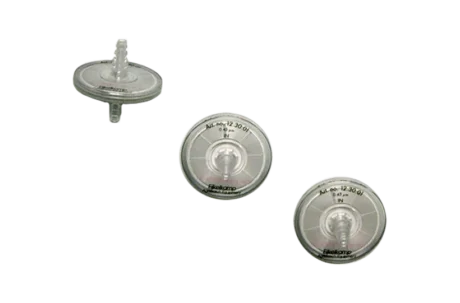
What is stocked
- PE Tube — stiffer walled, holds its shape and resists kinking. The practical choice for the run down a monitoring well.
- Silicone Tube — flexible, and what a peristaltic pump head requires to survive repeated compression by the rollers.
- Ball Valve — flow control at the surface without stopping the pump, and isolation while changing containers.
- In-Line Water Filter — filtration within the pumped line for dissolved fraction analysis.
Filter in the line, not in the bucket
Where the determinand is a dissolved concentration, the sample has to be filtered — and when it is filtered matters as much as whether. Collecting into a container and filtering afterwards exposes the water to air and adds a handling step, and both can shift the result before it reaches the bottle.
An in-line filter in the pumped stream does the filtration before the sample ever meets the atmosphere. Whether to filter at all is a question for your method rather than your preference: dissolved fraction analysis requires it, total concentration analysis requires that you do not, and getting it wrong makes your results incomparable with everyone else's.
The tubing decision
PE and silicone are not interchangeable and most setups need both. PE is stiff enough to feed down a well without folding on itself; silicone survives being crushed repeatedly by peristaltic rollers where PE would crack. The common arrangement is PE for the vertical run and a short silicone section through the pump head.
Material also affects results. Volatiles in particular are sensitive to what the sample touches and for how long, so if you are working to a specified method, check the tubing requirement before you order rather than after the laboratory raises a query.
Why generic tubing is a false economy
Tubing is cheap enough to be bought without much thought, and it is the component most likely to carry contamination from one well to the next. Surfaces retain traces of what has passed through them, and on a contaminated site that is enough to put a detection in a well that does not have one.
Two rules make this go away. Use tubing manufactured to a known specification rather than whatever is in the van — unspecified tubing can leach or adsorb, and the resulting contamination is indistinguishable from a genuine site finding. And dedicate a length to each well, or fit fresh tubing between wells. At the price of tubing set against the cost of a disputed dataset, this is not a close decision.
Related equipment
See Groundwater Pumps for the pumps this connects to, including flow through cells and filter holders, and Liquid Samplers where a bailer or discrete depth sampler is required instead. For the wells see Monitoring Wells. Tubing and valves are also available for immediate ordering in the shop.
Consumables FAQs
Ordering and support
All consumables here are genuine Eijkelkamp, supplied direct from our UK operation. If you are working to a specified sampling method, tell us which one and we will confirm the tubing material, diameter and filtration it requires. Request a quote or get in touch.