
Soil Moisture
Rhizon soil moisture samplers for extracting pore water in place with minimal disturbance. Suction draws the soil solution through a porous tube while leaving soil particles behind, so the same point can be sampled repeatedly over a season. Genuine Eijkelkamp equipment supplied direct from our UK operation.
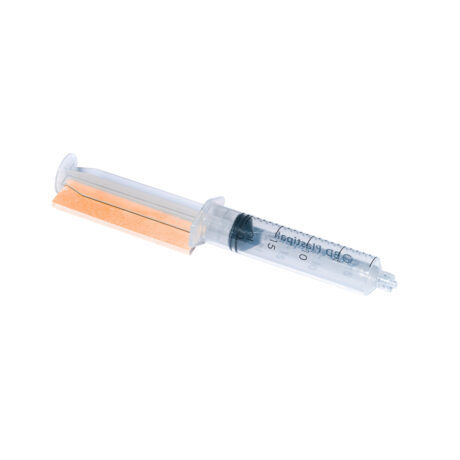

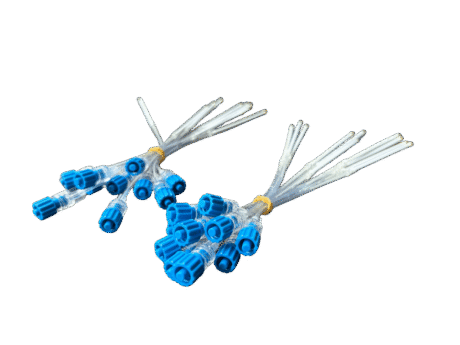
What is in stock
- Rhizon Soil Moisture Sampler — the porous sampler on its own, for adding points to an existing installation or where you already have collection hardware.
- Rhizon Soil Moisture Sampling Set — sampler and collection components together. The right starting point for a first purchase.
- Plastic Syringe for MacroRhizon — the consumable part of the arrangement, stocked separately for restocking.
How pore water sampling works
A Rhizon is a thin porous tube pushed into the soil at the depth of interest and connected to a syringe or vacuum vessel. Applying suction draws water through the porous section while soil particles stay outside, so what arrives in the syringe is the soil solution — the water actually moving through the profile, with whatever is dissolved in it.
The alternative is taking a bulk soil sample and extracting solution from it in a laboratory. That works, but the act of removing, transporting and extracting the sample changes it, and it gives you one number from one disturbed point in time.
Why sample in place and repeatedly
The strength of this method is the time series. Because the sampler stays installed, you can return to the same point again and again without re-disturbing the soil — tracking nitrate through a growing season, watching salinity respond to irrigation, following a contaminant plume during remediation, or measuring how quickly an application moves through the profile. A single disturbed sample cannot show any of that.
It also answers a different question from a soil analysis. Total concentration in the soil tells you what is present; solution chemistry tells you what is mobile and available — to plant roots, or to groundwater below.
Practical points
Yield depends on soil moisture. In wet soil a usable volume arrives reasonably quickly; in dry soil it comes slowly and may fall short of what your determinand list needs. Where volume matters, install several samplers at the depth of interest rather than relying on one. Plan the depths before installation too — the point of the method is repeat sampling from a fixed position, so moving a sampler part way through a study breaks the series.
Related equipment
For soil moisture content and physical properties rather than solution chemistry, see Soil Physical Research and Sensors and Probes. For recovering soil samples themselves, see Soil Sampling, and Soil Augers for getting to depth. Where the interest is groundwater rather than pore water, see Water Sampling.
Soil moisture sampling FAQs
Ordering and support
Everything listed here is genuine Eijkelkamp equipment supplied direct from our UK operation. Tell us the depths you need to sample, the soil type and the volume your laboratory requires per sample, and we will confirm how many samplers to specify before you order.