
Soil Sampling
Eijkelkamp soil sampling equipment for recovering, retaining and describing soil samples in the field. The range covers sample rings and ring holders, stainless steel sample tubes and liners, coring apparatus and split tube samplers, plus the field description tools that go with them. Genuine Eijkelkamp equipment supplied direct from our UK operation.





Undisturbed sampling: rings and holders
Where a test depends on soil structure rather than just its composition, the sample has to reach the laboratory with its fabric intact. Sample rings are the standard way of doing that for bulk density, permeability, shear strength and water retention work.
- Soil Sample Ring — the ring itself. Choose the volume your laboratory method specifies rather than the one that is convenient.
- Closed Ring Holder — holds the ring square while it is driven so the sample enters cleanly instead of smearing at the edge.
- Hammering Head for Sampling Rings — spreads the blow across the holder. Never strike a ring directly.
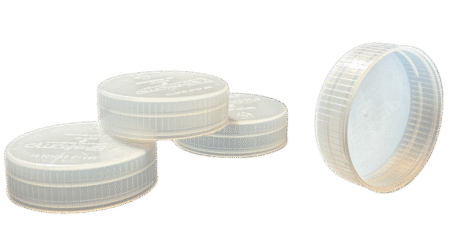
- Protective Cap for Sample Rings — seals the ring for transport so moisture content is preserved between site and laboratory.
Tube and core sampling
For longer samples and for reaching a specific horizon without disturbing what sits above it:
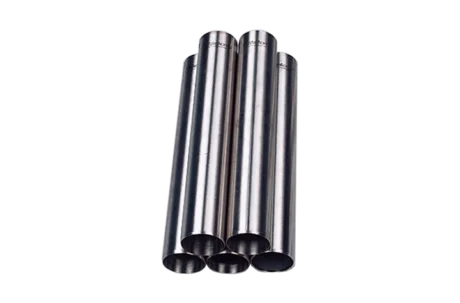
- Stainless Steel Sample Tube — a durable tube for driven sampling where cross-contamination between sites is a concern.
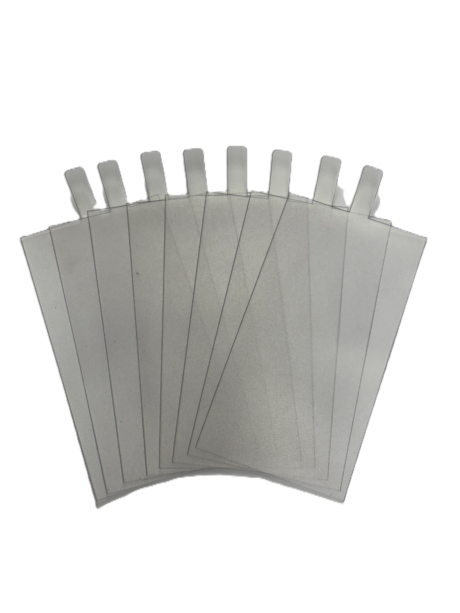
- Sample Liners — disposable liners that let the sample be capped and sent to the laboratory without transferring it, avoiding handling disturbance.
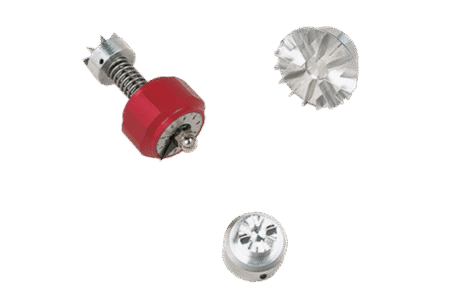
- Coring Apparatus — for recovering continuous cores where the sequence of layers matters.
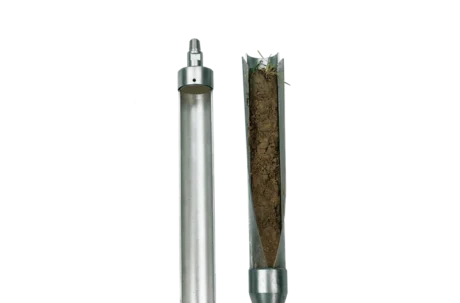
- Split Tube Sampler — opens lengthways so the core can be examined, described and sub-sampled without pushing it out of a closed tube.
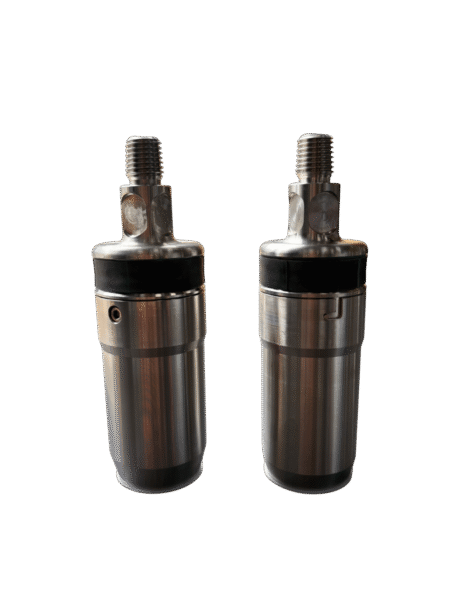
- Lost Cone — keeps soil and water out of the tube while it is driven to depth, so sampling starts in undisturbed ground rather than in dragged-down material.
Describing the soil in the field
Half of a useful site record is made before anything reaches a laboratory. These standardise the description so two surveyors log the same ground the same way:
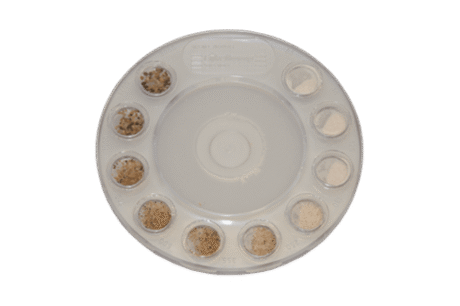
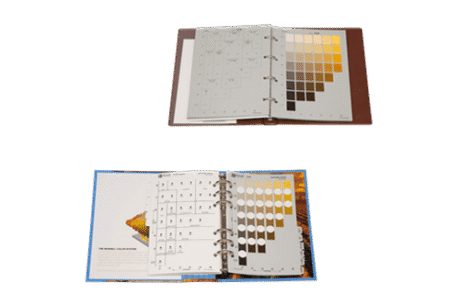
- Soil Colour Book — a reference chart for recording soil colour in a defined, repeatable notation.
- Sand Ruler — a visual reference for grain size classification.
- Pocket Penetrometer — a rapid field estimate of unconfined compressive strength.
- Pocket Vane Tester Set with 3 Vanes — a rapid field estimate of shear strength in cohesive soils.
Getting to the sampling depth
Sampling equipment recovers the material; something else has to get you to it. For shallow work that is usually a hand auger, with a gouge auger to read the profile and decide which horizon to sample. For deeper investigation, see our drilling rigs.
Soil sampling FAQs
Ordering and support
Everything listed here is genuine Eijkelkamp equipment supplied direct from our UK operation. Ring sizes and liner dimensions are dictated by the test method you are working to, so if you tell us the standard your laboratory uses we will confirm the correct specification before you order.